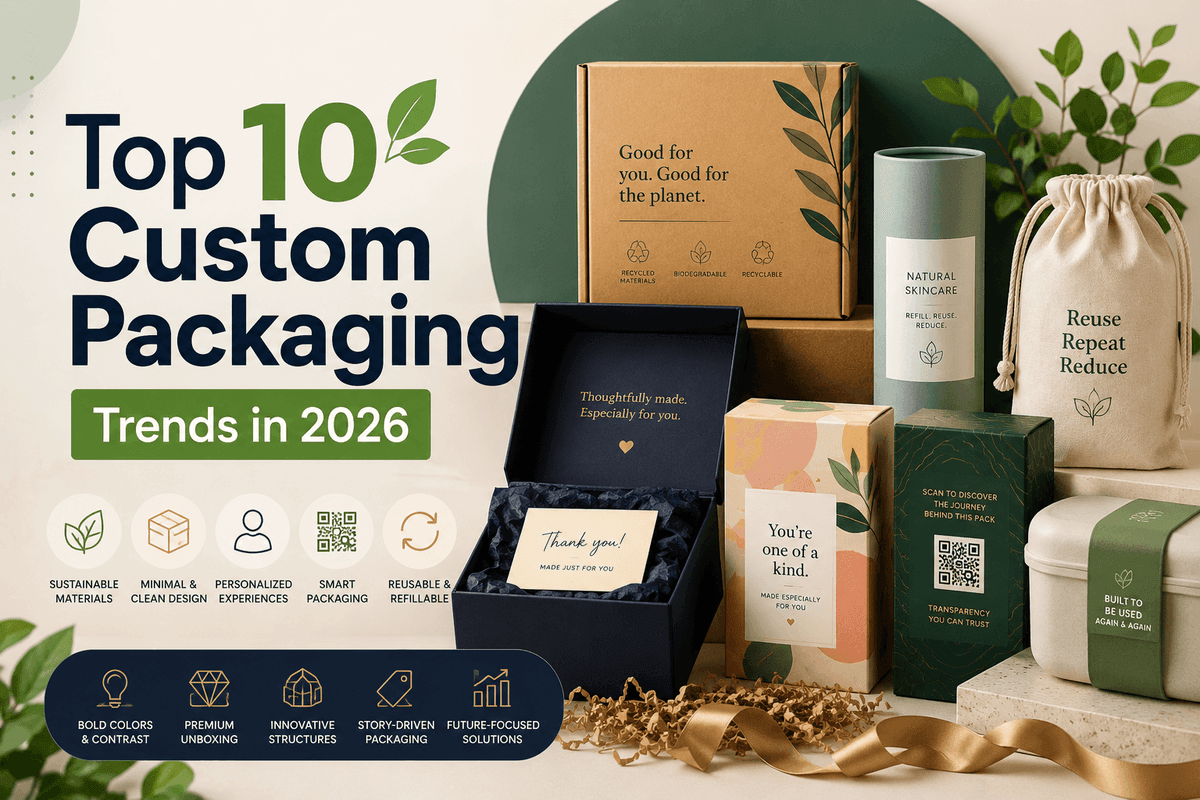
Top 10 Custom Packaging Trends in 2026
Marketing Expert Team • July 17, 2026
Packaging expectations continue to evolve in 2026, inspiring new ideas that combine creativity, functionality and sustainability while helping brands build stronger connections with their customers.
Effective packaging can create excitement, simplify the customer experience and deliver a memorable element of surprise. Beyond protecting the product, it communicates the brand’s values and often remains in the customer’s mind long after the package has been opened.
Today’s consumers are more informed, socially conscious and exposed to countless marketing messages. As a result, practical, durable, visually appealing and sustainable packaging has become an essential tool for brand communication and differentiation.
So, what are the key factors shaping successful custom packaging in 2026?
Let’s explore the top custom packaging trends defining the year.
10 Best Custom Packaging Trends in 2026
1. Sustainable Packaging
Sustainable packaging continues to be one of the most important custom packaging trends in 2026. Growing environmental awareness, changing customer expectations and stricter regulations are encouraging brands to reduce their dependence on plastic-heavy packaging.
Businesses are increasingly choosing recyclable, biodegradable and compostable materials. Plant-based polymers, recycled paper, seaweed-based packaging and mushroom-fibre alternatives are also gaining attention as brands look for more responsible packaging solutions.
IKEA’s mushroom-based packaging is a well-known example of this innovation, as the material naturally decomposes within a short period. Similarly, major companies such as Unilever have introduced long-term commitments to reduce the use of virgin plastic.
For smaller and medium-sized businesses, adopting sustainable packaging can help reduce environmental impact while strengthening brand credibility among environmentally conscious customers.
2. Technology-Enabled Smart Packaging
Technology is transforming packaging from a simple protective layer into an interactive customer experience.
QR codes, NFC chips and RFID tags are increasingly being added to custom packaging. These technologies allow customers to access product information, usage instructions, authenticity details, promotional offers and brand stories through a simple scan.
Brands are also exploring augmented reality and AI-assisted packaging experiences. L’Oréal, for example, has used QR-enabled packaging to provide beauty tutorials and ingredient information. Nestlé has also introduced smart labels that help customers understand product sourcing and supply-chain details.
Technology is improving the packaging design and manufacturing process as well. Digital platforms such as Pacdora allow brands and packaging manufacturers to create, review and approve designs more efficiently. Processes that previously took several days can now be completed within hours, making custom packaging more accessible even for businesses working with short deadlines.
3. Functional and User-Friendly Packaging
Customers now expect packaging to be easy to open, use, store, return and dispose of. Complicated and excessive packaging often creates frustration and may negatively affect the overall customer experience.
In 2026, brands are focusing on practical packaging designs that combine durability with convenience. Features such as resealable closures, easy-open tabs, tear strips, return-ready boxes and reusable containers are becoming increasingly popular.
Amazon’s Frustration-Free Packaging initiative is a strong example of this trend. It reduces unnecessary plastic ties, clamshells and excessive packaging materials while making products easier to access.
Similarly, resealable mylar bags are widely used in the food industry because they help protect freshness while providing customers with a convenient storage solution.
Functional packaging makes the product easier to use and helps create a more positive connection between the customer and the brand.
4. Packaging for Product Authentication and Transparency
Custom packaging is increasingly being used to protect products from counterfeiting and reassure customers about product authenticity.
This trend is particularly important for industries dealing with high-value or sensitive products, including perfumes, jewellery, skincare, cosmetics, medicines and gourmet food products.
Brands are using QR codes, holographic printing, tamper-proof seals, serial numbers and security labels to help customers identify genuine products. Pfizer, for example, has used authentication features such as QR codes and holographic elements on selected product packaging.
Transparency is another important part of this trend. Brands are using clear labels, transparent windows and simple product messaging to openly communicate information about ingredients, sourcing and sustainability.
Kind Snacks uses transparent wrappers that allow customers to clearly see the ingredients inside. Everlane also uses packaging to reinforce its commitment to ethical sourcing and business transparency.
Authentic and transparent packaging helps reduce customer uncertainty and builds stronger trust in the brand.
5. Personalized Packaging
Personalized packaging has become a powerful way for brands to create emotional connections with customers.
Advancements in digital printing now allow businesses to personalize packaging at scale. Brands can add customer names, customized messages, location-based designs, seasonal themes or event-specific details to boxes, labels and inserts.
Coca-Cola’s “Share a Coke” campaign demonstrated how personalized packaging can improve engagement and encourage customers to share products on social media.
Subscription brands such as HelloFresh also use personalized recipe cards, notes and packaging inserts to make each delivery feel more relevant and thoughtfully prepared.
Personalized packaging transforms a regular purchase into a memorable experience. It can improve customer loyalty, increase social sharing and help the brand remain memorable after the product has been used.
6. Minimalist Packaging Designs
Minimalist packaging remains a leading design trend in 2026. Customers are increasingly drawn towards packaging that feels clean, clear and easy to understand.
Minimalist designs usually feature simple typography, balanced spacing, limited colours and uncluttered product information. This approach allows the product and brand identity to remain the main focus.
Apple’s packaging is a recognised example of minimalist design. Its clean white boxes, subtle typography and carefully organised layouts communicate quality and sophistication without excessive decoration.
Minimalist packaging can also reduce the use of inks, finishes and unnecessary materials. This makes it visually appealing as well as more efficient and environmentally responsible.
The trend is especially effective for luxury skincare, electronics, fashion and premium lifestyle products, where simplicity can communicate confidence, authenticity and exclusivity.
7. Subscription Box Packaging
The subscription economy continues to grow, increasing the demand for creative and durable subscription box packaging.
Customers do not only expect the product to arrive safely. They also look forward to an enjoyable unboxing experience. As a result, brands are investing in attractive boxes, branded inserts, internal partitions, personalized notes and storytelling elements.
Companies such as Birchbox and Blue Apron use packaging to create anticipation and encourage repeat engagement. Their boxes are designed to protect the products while making every delivery feel like a carefully prepared experience.
High-quality subscription boxes are also commonly reused for storage, gifting or organisation. This allows the packaging and brand identity to remain visible long after the original products have been removed.
With thoughtful design, subscription packaging can make everyday products feel premium, valuable and gift-worthy.
8. Bold Colours and Graphic Storytelling
While minimalist packaging is popular in premium sectors, bold colours and expressive graphics are gaining attention among brands targeting younger and more visually driven audiences.
Packaging is increasingly being used as a storytelling platform. Vibrant colours, illustrations, creative typography and conversational messages can help brands communicate their personality and values.
Oatly is a strong example of this approach. Its cartons use unconventional typography, informal messaging and playful content to create a distinctive brand voice.
Lush Cosmetics also uses bright colours, bold labels and playful design elements that reflect its energetic and ethical brand positioning.
Bold packaging can improve shelf visibility and make products more recognisable in online content. It also encourages customers to photograph and share the packaging on social media platforms.
9. Corrugated and Cardboard Packaging
Corrugated and cardboard boxes remain among the most widely used packaging solutions in 2026 because they are affordable, versatile and relatively environmentally friendly.
These boxes can be customised with printed graphics, branded tape, partitions, laminations, coatings and structural features. They are suitable for e-commerce deliveries, retail products, luxury packaging, food items and subscription boxes.
Major e-commerce businesses such as Amazon and Zalando continue to rely heavily on cardboard packaging. They are also introducing improvements such as recyclable inks, reduced material usage and easy-open designs.
Cardboard packaging is equally useful for smaller businesses because it can be adapted for both lightweight shipping requirements and premium rigid-box presentations.
Its flexibility, printability and recyclability make cardboard an important packaging choice across multiple industries.
10. Multi-Sensory Packaging and Experiential Design
Multi-sensory packaging is designed to engage customers through sight, touch and sometimes even smell.
Brands are using embossed logos, textured papers, soft-touch coatings, metallic foils, ribbons and scented inks to create packaging that feels more memorable and luxurious.
Jo Malone London uses textured boxes and elegant ribbons to transform product unboxing into a refined brand experience. Godiva Chocolates also uses embossed details and gold-foil elements to enhance the premium appearance of its packaging.
This trend is especially relevant for cosmetics, perfumes, gourmet food, jewellery and luxury products, where customers expect packaging to reflect the value of the product inside.
By appealing to multiple senses, experiential packaging can create stronger emotional connections and help customers associate the brand with quality, attention to detail and exclusivity.
Conclusion
Packaging is no longer just a container used to protect a product. In 2026, it will play an important role in shaping brand perception, communicating values and improving the overall customer experience.
Sustainable materials reflect environmental responsibility, while minimalist and personalized designs help brands create stronger visual and emotional connections. Smart packaging improves customer interaction, and subscription boxes make regular deliveries feel more exciting and premium.
Functional designs, transparent labelling and authentication features help brands address practical customer concerns. At the same time, bold graphics and multi-sensory elements allow packaging to appeal to both emotion and logic.
The biggest opportunity for brands is to find the right balance between creativity, functionality, sustainability and cost. Businesses that successfully adopt these packaging trends can meet evolving customer expectations, strengthen brand loyalty and stand out in an increasingly competitive market.
Contact The Mailer Box for custom packaging solutions that combine modern design, sustainability and practical functionality. Book a consultation today.
For more details, you can connect with us here. :-